


Image credit
Most people measure brightness.
They look for the credentials, the logos, the schools, the fundraising speed. The signal that’s easy to perceive. Brightness is fast to evaluate. Brightness fills a slide deck.
But brightness is just light reflected from somewhere else. Point a strong enough source at anything and it will look bright.
What I look for is wavelength.
The frequency that’s yours and only yours. The thing that doesn’t need external light to keep going. The internal source.
And then: what you do with the light that hits you.
For me it was a NASA space station design competition. I was a kid in rural Romania. I had no computer at home. I found one and entered. The idea came from watching the honeycomb structure of the bees in my backyard. Nobody asked me to enter. I won the grand prize.
Nobody expected that. Including me.
But I could not look at the problem and do nothing. There is a phenomenon in physics called fluorescence. A material absorbs energy at one frequency and re-emits it at another. It doesn’t reflect what hits it. It transforms it. The light it gives off comes from within its own structure, triggered by pressure but not merely bounced back by it.
This is what motive force founders do with adversity, with friction, with the years when nothing is working. They don’t just survive it. They absorb it and change how they act. The energy that comes out is not the same energy that went in.
Resilience means you survived the hit. Fluorescence means you integrated it, and what you emit now is yours. The people who get burned absorb without integrating. The pressure finds no structure to work with and destroys what’s there.

Image credit
The Source of Motion
You know if you have it.
Not because someone told you. Because you noticed that you couldn’t stop. You were building before anyone funded you, thinking about this before anyone asked you to. The problem didn’t come from a market map. It came from something you couldn’t unsee.
You didn’t pick it. It picked you.

Image credit
Energy, Not Geometry
Credentials are train stations.
Harvard is a station. YC is a station. A previous exit is a station. The train passes through all of them, or it doesn’t. The station doesn’t tell you whether the engine is running.
I have met founders with every credential who had genuine motive force. I have met founders with none who had it. I have met founders with every credential who were coasting on brightness alone, and unknown founders already three years deep into a problem they couldn’t walk away from.
The credentials don’t disqualify anyone. They don’t qualify anyone either.
The question is always the engine.

Image credit
The Architecture of Necessity
You did not wait for permission.
That is the thing I look for first. Not what you are planning to build. What you already built when no one was watching, when there was no funding, no market validation, no reason except that you could see something that didn’t exist yet and the gap was intolerable.
You have a version of this. The thing you made before anyone called you a founder. The problem you kept returning to before it had a name. The moment you stopped asking whether this was reasonable and started asking how.
That moment is what I am looking for. Not the pitch. The moment before the pitch existed.
Every founder has a documented function: what they say they believe, what they put in the deck. And then there is the actual implementation: what they built before anyone asked, how they operate under pressure, what they cannot stop doing even when it is inconvenient. The gap between those two things tells you everything. I am not looking at the documented function. I am looking at the actual implementation.
The market looks at the product and sees a category. I learned to look past that. There is a founder I almost missed because the category he was in was going to lose. What I almost failed to see: he was not attached to the category. He was attached to the underlying problem. When the center of gravity shifted, he moved with it. The market saw a company in a declining space. I nearly agreed. What was actually there was an engine that had already found its next problem.
Motive force is not stubbornness around an idea. It is persistent orientation toward truth as it emerges.
You know the difference between conviction and stubbornness because you have felt both. Conviction updates when reality asks it to. Stubbornness doesn’t. The founders who burn out are not the ones who were wrong. They are the ones who stopped being able to find out.
Commitment without the willingness to be corrected becomes a trap. The force has to stay in contact with reality to matter. The engine and the destination are the same thing. You are not building toward the moment this matters. The building is already the thing that matters. It is not sacrifice. It is not even ambition.
It is inevitability.

Image credit
The Shape of Coherence
Motive force expresses itself in what it builds.
I call it Beautiful Software. Not beautiful as in polished. Beautiful as in coherent: technically rigorous, designed to fit into how work actually happens, priced in alignment with the value it creates.
You know this feeling. You are paranoid about the small thing that doesn’t fit the picture in your head. Does it matter to the customer right now? Maybe not. But you spend the time anyway, because you know what it becomes later. Because you cannot ship something you know is wrong and call it done.
That standard is not a one-time decision. It is an everyday practice. It compounds.
The alternative also compounds. The team that does whatever the customer asks ends up with a bloated product, conflicting features, engineers refactoring constantly because the requirements kept changing. They moved fast. They broke things. And then they kept breaking them.
The same force that shapes the founder shapes the product. I have seen this in both directions. A founder whose father told her from childhood: do good on the largest possible scale. She built software to treat hundreds of patients simultaneously. Every product decision from day one was made with massive scale in mind. Her internal directive and her architecture were the same thing. I have also seen a team rewrite their entire codebase on a tight deadline purely because their community requested it. Re-engineering your product mid-flight is not rational, unless user trust is your true north.
But there is a third dimension to Beautiful Software that founders with motive force most often get wrong, and it is the one that determines whether the work survives.
There is a developer tool I think about often. Hundreds of millions of downloads. Nearly ran out of money because the founders were afraid to charge for it. Not because they were weak. Because they loved what they had built. The love was real. What it was missing was the courage to say: this is worth paying for.
You may recognize this feeling. The product works. People depend on it. Charging for it feels like a betrayal of the thing you made it to be. So you wait. And something that hundreds of millions of people depend on nearly runs out of money to exist.
Economic courage is part of the craft. A thing you cannot sustain is a thing you eventually abandon. The founders who build things that last think about monetization from day one, not because they are mercenary but because they understand that sustaining the work is an expression of respecting it.

Image credit
The Atmospheric Opportunity
I am not looking for founders who need momentum.
I am looking for founders who generate it.
You got close enough to something broken to feel it. Not read about it. Feel it. The gap between what existed and what should exist became intolerable. That is not the same as having an idea. Most people have ideas. You had a wound that wouldn’t close.
The applications you describe feel fragmented to people who need the market to already exist. The use cases seem disconnected. That is not a problem with your idea. It is what it looks like when a primitive emerges before the workflows around it have formed. You are not imagining a future from the outside. You felt the break from the inside, and you left to fix it.
The skill on my side is separating empty dreaming from early truth. They are not the same thing and they do not feel the same in a conversation. The founder with early truth has been unusually proximate to the place where the current system breaks. That proximity is the tell.
Right now there is a lot of artificial brightness in this market. People who were in the right place at the right time, who started companies because the moment was obvious, building without a particular attachment to what they are building. That is fine. It is how markets work. But it creates noise, and the noise makes it harder for founders with genuine motive force to be seen, because the signal and the performance of the signal look similar from a distance.
There should exist a fund that sees the difference.
The energy is already there. In the people who are too early, too obsessed, too deep into a problem that doesn’t have a category yet. Most of it goes unharnessed. The opportunity is not to create it. It is to recognize it early and build around it correctly.
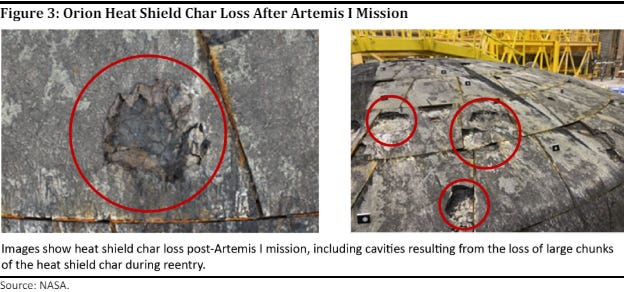
Image credit
Thermal Management
A note on endurance.
Some people respond to friction by pulling back. Reducing exposure. Reducing ambition. Waiting for better conditions. I don’t think that works.
Real rockets don’t survive reentry by stopping. They survive because of the heat shield, because of thermal management, because of infrastructure built specifically to protect the engine from the heat it generates. The engine at full capacity produces the most heat. The solution is not to throttle it. The solution is to build for it.
This fund is a cooling system. Not just fuel.
The founders who burn out are not the ones who worked too hard. They are the ones who started making decisions from fear. Fear of losing users. Fear of being perceived as something other than what they built themselves to be. Fear of asking the monetization question that might reveal they don’t know the answer. That fear is the heat that melts things. It converts internal drive into external approval-seeking. The engine starts running on the wrong fuel.
You know what it looks like when it starts. You stop building toward truth and start building toward safety. The product decisions change first. Then the hiring decisions. Then the fundraising story. By the time it is visible from the outside, it has been running for a long time.
My job is to reduce it. Not by protecting founders from hard things, but by protecting them from the specific thing that turns motive force into its opposite: the environment that rewards the performance of building over the actual thing.
More engine. Less horn.
Oana Olteanu, Motive Force
PS: If you are reading this and thinking: this is me, it probably is.
The founders I am looking for will recognize this immediately. Not because I described a type. Because I described a feeling they have been living without anyone naming it.
The ones who don’t have it will read this and wonder what I mean.
That is how you know.
This is one of my favorite things I’ve read in a while, you capture that feeling, the essence. The coherence!